History
History
1925
1925 In response to the feeling of Nationalism and keeping alive the ancient systems of indigenous medicine the school of Indian medicine was started. The degree conferred at this institution was L.I.M.
1947
In accordance to the recommendations of the Usman Committee, Chopra Committee and the Pundit Committee of Government of Madras and Government of India, the character of the institute was changed, upgraded and named as College of Indian Medicine. The College gave the degree as G.C.I.M.
1948
The College was again renamed as College of Indigenous Medicine and one of the three systems of Indigenous Medicine, Ayurvedha-Siddha-Unani, should be chosen by each candidate who joins GCIM and Allopathic Medicine was common to all.
1953
1953 The College was renamed as the College of Integrated Medicine. The course was shortened to 4.5 years and one year of compulsory house- surgeoncy on par with MBBS course. Government ensured that the GCIM graduates could practice both the systems of Medicine. In 1959 the lst batch of GCIM students were admitted and in 1960 the College of Indigenous Medicine was closed.
1960
1960 The Integrated Medicine Course (MBBS DEGREE) was started. The first and second year GCIM students were given the option of joining the MBBS course, while the senior students were offered the D.M&S on completion of the course and bringing them into the Allopathic fold.
1965
1965 The College was recognised as Women Medical College and named as Government Kilpauk Medical College, admitting only women candidates for MBBS degree. Meanwhile, those who have completed GCIM, D.M&S were given the option to undertake condensed MBBS course at the Chengalpattu Medical College to obtain the MBBS degree and come into the fold of Modern Medicine.
1967
The women students agitated to have a co- educational institution and the erstwhile Government of Madras granted permission and both men and women were admitted to MBBS degree from 1967.
1972
1972 Development of the Medical College is set into pace with the Surgical Block coming into being. Later all the different super-specialities came into being between 1972 and 2001 and stands in its glory to-day.
1981
1981 Intensive Care Unit was sanctioned with 10 beds and was commissioned in June 1981 by Hon.Dr.H.V.Hande, the Minister for Health, Government of Tamilnadu. 50 beded comprehensive Burn unit was sanctioned on the I floor of the out-Patient Block and was commissioned in March 1985 by Hon.Dr.H.V.Hande, then Minister for Health under the Presidentship of Dr.Mrs.Lalitha Kameswaran, then Director of Medical Education.
1984
1984 Department of Cardiology was sanctioned with Prof.S.Thanikachalam as its Chief.
1987
1987 Department of Nephrology was sanctioned and commissioned in July 1987 with Prof.C.M.Thiagarajan as its Chief.
1988
1988 Department of Surgical Gastroenterology was sanctioned with Prof.Srikumari Damaodharan as its Chief.
Established as one of Chennai’s premier government medical institutions, Government Kilpauk Medical College continues to serve as a major tertiary care and teaching center with multiple specialty and super-specialty facilities across its campus. The institution offers extensive undergraduate, postgraduate, and super-specialty training programs while catering to thousands of patients daily.
GOVERNMENT KILPAUK MEDICAL COLLEGE MEDICAL COLLEGE HOSPITAL CAMPUS
1. Surgical Block
Constructed in 1972 with the largest plinth area of 6461 sq.m, the six storeyed Surgical Block serves as a major hub for operative and perioperative care. The block houses multiple surgical specialties, operation theatres, inpatient wards, and academic units.
2. Steam Laundry
Built in 1974, the Steam Laundry provides centralized linen sterilization and laundry services for the hospital campus, ensuring an important backend infrastructure facility for patient care operations.
3. Maternity Block & Family Planning Wing
The Maternity Block & Family Planning Wing, built in 1975 with a plinth area of 5206 sq.m, is one of the institution’s major centers for women’s healthcare. It has contributed extensively to maternal and reproductive healthcare services for decades.
4. Trauma Block
The Trauma Block, constructed in 1996 with a plinth area of 3204 sq.m, functions as a major emergency and trauma care center. The facility supports rapid assessment, surgical intervention, and multidisciplinary critical care services for accident and emergency cases.
5. ART Centre
Constructed in 2007, the ART Centre serves as an important facility for specialized counselling, treatment, and follow-up care.
6. Kitchen Block
The Kitchen Block, constructed in 2009 supports centralized food preparation and nutrition services for patients and staff. The facility maintains hygienic food handling practices and ensures timely dietary support across hospital wards.
7. NICU Block
Constructed in 2009, the NICU Block is dedicated to advanced neonatal intensive care services. The facility supports specialized monitoring and treatment for premature and critically ill newborns.
8. Psychiatric Block
Built in 2009, the Psychiatric Block provides specialized mental health and behavioural medicine services. The block supports psychiatric evaluation, counselling, rehabilitation, and academic teaching activities.
9. O&G Extension Block
The Obstetrics and Gynaecology Extension Block was constructed in 2010 enhances facilities for maternal healthcare, antenatal services, gynaecological treatment, and postgraduate training.
10. New Casualty Block
Established in 2011 over an area of 5220 sq.m, the New Casualty Block serves as one of the primary emergency response facilities of the hospital. The block manages high patient inflow through triage, resuscitation, and emergency stabilization services.
11. New OP Block
Constructed in 2011 with an area of 2937 sq.m, the New OP Block provides expanded outpatient consultation and diagnostic services. The facility accommodates multiple specialty clinics and supports efficient patient movement across departments.
12. Mortuary Block
The Mortuary Block, established in 2016 provides modern facilities for medicolegal and pathological services. The block supports forensic medicine teaching, post mortem examinations, and academic training activities.
13. New Burns Ward Block
Constructed in 2016 with a substantial plinth area of 3060 sq.m, the New Burns Ward Block offers advanced burn management and critical care facilities. The unit is equipped for emergency stabilization, reconstructive support, and multidisciplinary treatment. It serves as an important referral center for burn injuries in the region.
14. PICU Block
The PICU Block, established in 2016 provides intensive paediatric critical care services. The facility supports management of critically ill children requiring continuous monitoring and specialized interventions.
15. CMRL Block
Built in 2019 with a plinth area of 975 sq.m, the CMRL Block reflects the institution’s infrastructural expansion and modernization initiatives. The block supports improved connectivity and optimized utilization of hospital facilities amid urban development projects.
The total plinth area of the 15 buildings across the Government Kilpauk Medical College campus is 31,159 sq.m, reflecting the institution’s extensive healthcare and academic infrastructure developed over several decades.
GOVERNMENT KILPAUK MEDICAL COLLEGE CAMPUS
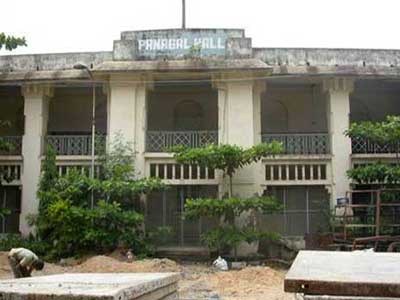
1. Panagal Hall
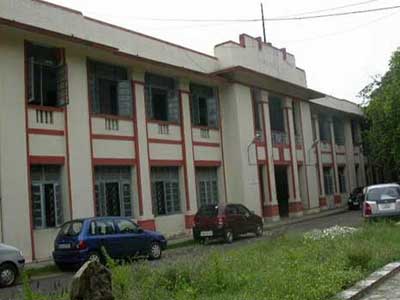
Established in 1925 with a total plinth area of 2430 sq.m, Panagal Hall is among the most historically significant structures within the campus. The hall has hosted generations of academic and institutional activities. Its heritage value reflects the early development of medical education infrastructure in our college.
2. College Main Block (Forensic & Pathology)
The College Main Block was established in 1932 and spans 2571 sq.m. Housing the departments of Forensic Medicine and Pathology, the block plays a major role in diagnostic education, laboratory training, and medicolegal studies.
3. Co-operative Store & Society
Dating back to 1932, the Co-operative Store & Society has long served the daily needs of students, faculty, and staff within the campus. The facility functions as a convenient access point for academic materials, refreshments, and essential supplies.
4. Animal House
Constructed in 1962, the Animal House facility provides controlled environments for laboratory studies while adhering to ethical and institutional guidelines.
5. Histology Block over Anatomy Museum
Constructed in 1966, this block integrates histology teaching facilities with the Anatomy Museum infrastructure. The building supports teaching sessions, specimen demonstrations, and practical learning for medical students.
6. SPM Block
The SPM Block, constructed in 1975 over 2580 sq.m of land supports epidemiological research, public health training, and outreach activities aimed at improving community healthcare delivery.
7. New Library Block
The New Library Block, built in 1996 serves as a key academic resource center for students and faculty. The library, spread over 1060 sq.m, provides access to textbooks, journals, reference materials, and digital learning resources across various medical disciplines.
8. New Auditorium
The New Auditorium, constructed in 2004 with a spacious area of 1415 sq.m, serves as a central venue for academic conferences, cultural events, seminars, and institutional functions.
9. Examination Hall
Built in 2006, the Examination Hall provides a structured and secure environment for conducting university and institutional examinations. The facility supports large-scale assessments for undergraduate and postgraduate students.
10. New Faculty Hall
Built in 2011 and covering 6596 sq.m, the New Faculty Hall is one of the largest academic structures in the medical college campus. The building accommodates teaching spaces, faculty activities, conferences, and academic interactions across departments.
Spread across 10 major buildings with a combined plinth area of 17,893.91 sq.m, the medical college campus of Government Kilpauk Medical College reflects nearly a century of academic growth, architectural evolution, and commitment to excellence in medical education and research.
The banyan tree which is more than 100 years old is a proud heritage of this college. It occupies the Central portion of the Campus with its wide spreading branches and foliage. All the faculty blocks are situated around this famous banyan tree.
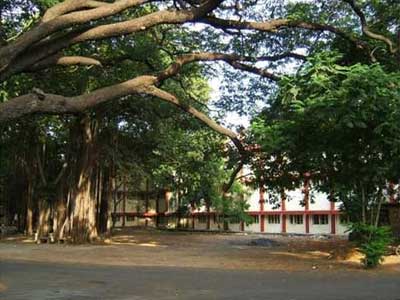
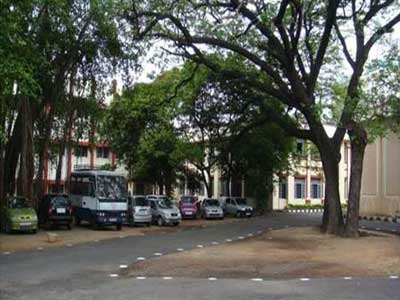
Another view of the banyan tree which serves multiple purpose
Vaidhyarathinam Dr.SRINIVASAMURTHI
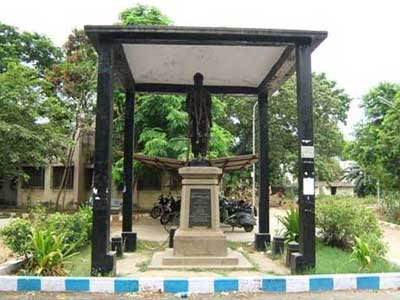
Dr.Srinivasamurthi, a doyen in the field of Indian systems of Medicine, was the personal physician to the erstwhile MahaRaja of Panagal. He owned the entire area now housing the Kilpauk Medical College and Hospital, Dr.Srinivasamurthi was instrumental in creating in the public mind, an awareness to the potentialities of the indigenous systems of medicine and so also he appraised the Maharaja for instituting the School of Indian Medicine. The Raja was so overwhelmed and with joy he donated the entire piece of land under his command and thus was born in 1925, the School of Indian Medicine. The horse stable of his, now presents as the Anatomy Department.Dr.Vaidhyarathinam Srinivasamurthi, was the first principal of the institution. Smt.Rukmani Lakshmipathi, the popular Minister of Public Health raised the status of the institution in 1947 and has risen to its present glory. In fond remembrance of the glory of Vaidhyarathinam, Dr.Srinivasamurthi, his statue has been established inside the campus of Kilpauk Medical College.
GOVERNMENT PEREPHERAL HOSPITAL Annanagar, Chennai 600 102
The Government Peripheral Hospital at Annanagar was started in the year 1979 with 100 beds to reduce the overcrowding in the Kilpauk Medical College
Hospital and situated at the periphery. General Medicine, General Surgery, Paediatrics and Obstetrics and Gynaecology departments with Radiology and Microbiology units were initially established.
In 1986 the Department of Digestive Health Diseases was started.
In 1994 the Department of Surgical Gastroenterology was started.
This is one of the oldest blocks built in the year………… The plinth area is ………..sqmeter in the ground floor and ………………..sqmtr I the first floor. It houses the departments of Biochemistry, Physiology and Pathology. There is a large museum which houses very rare specimens. It also has four lecture theatres with the seating capacity of 100 each and three laboratories.
The famous PANAGAL HALL is one of the oldest building constructed and named after its founder. It is the centre stage for the various Academic sessions routinely conducted by the different departments.